

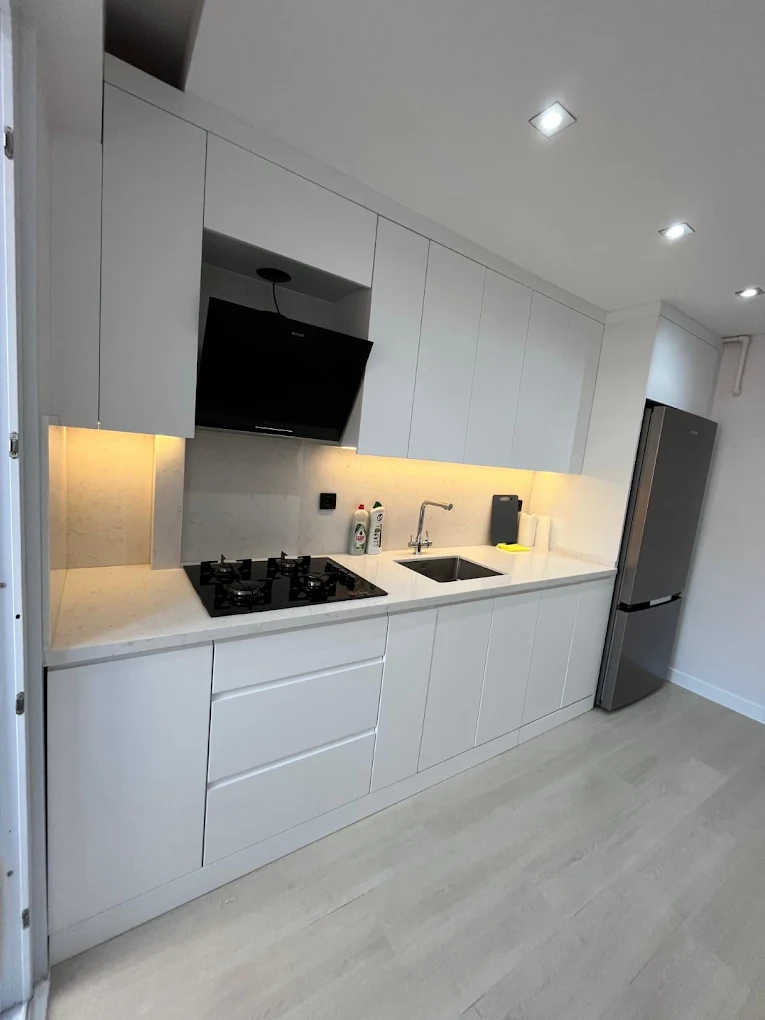
Quick answer: Compare matte and polished finishes by light reflection, fingerprints, pattern perception and room character. This guide helps you evaluate material, dimensions, fabrication and site conditions in one project context instead of making a decision on appearance alone.
Which criteria should be evaluated together?
This guide helps you evaluate material, dimensions, fabrication and site conditions in one project context instead of making a decision on appearance alone.
Light reflection and glare is a primary decision point for this subject. Match it to real usage frequency and the manufacturer's care or installation guidance rather than relying on a catalogue image alone.
Fingerprints and daily marks should be marked clearly on the measurement and layout drawing. If it affects a cut-out, seam, visual continuity or ergonomics, record it as a fabrication note before approval.
Vein/pattern contrast can change slab layout and fabrication effort. Before cutting starts, verify the actual model, dimensions, direction and required tolerances on the same technical drawing.
Modern or classic room character should not become an installation-day surprise. Survey the delivery route, support, access and final-use conditions in advance to reduce avoidable site risk.
Technical and design points that matter
light reflection and glare
Light reflection and glare is a primary decision point for this subject. Match it to real usage frequency and the manufacturer's care or installation guidance rather than relying on a catalogue image alone.
fingerprints and daily marks
Fingerprints and daily marks should be marked clearly on the measurement and layout drawing. If it affects a cut-out, seam, visual continuity or ergonomics, record it as a fabrication note before approval.
vein/pattern contrast
Vein/pattern contrast can change slab layout and fabrication effort. Before cutting starts, verify the actual model, dimensions, direction and required tolerances on the same technical drawing.
modern or classic room character
Modern or classic room character should not become an installation-day surprise. Survey the delivery route, support, access and final-use conditions in advance to reduce avoidable site risk.
Project scenario: how to validate the decision
For Matte vs Polished Countertops: Which Finish Fits?, a practical validation sequence is to lock down light reflection and glare and fingerprints and daily marks first, then test vein/pattern contrast and modern or classic room character against real dimensions and site conditions. Comparing two alternatives with the same dimensions makes the trade-off between appearance and technical requirements visible.
Compare matte and polished finishes by light reflection, fingerprints, pattern perception and room character. This guide helps you evaluate material, dimensions, fabrication and site conditions in one project context instead of making a decision on appearance alone.
Common mistakes
- Choosing only from colour or a catalogue image.
- Treating approximate dimensions as fabrication dimensions.
- Leaving sink, hob, socket, delivery and installation details until the end.
- light reflection and glare: Light reflection and glare is a primary decision point for this subject. Match it to real usage frequency and the manufacturer's care or installation guidance rather than relying on a catalogue image alone.
Pre-installation checklist
- Is the surface/product model and finish confirmed?
- Are piece-by-piece lengths and depths available?
- Are the actual sink, hob and cut-out models known?
- Are edge, backsplash, seam and vein direction decisions documented?
- Have survey, delivery and installation conditions been verified?
Conclusion
Compare matte and polished finishes by light reflection, fingerprints, pattern perception and room character. For Matte vs Polished Countertops: Which Finish Fits?, a practical validation sequence is to lock down light reflection and glare and fingerprints and daily marks first, then test vein/pattern contrast and modern or classic room character against real dimensions and site conditions. Comparing two alternatives with the same dimensions makes the trade-off between appearance and technical requirements visible.